
“The child has a hundred languages
(and a hundred hundred hundred more)”
— Loris Malaguzzi, The Hundred Languages of Children
If you have ever spent the day in a room full of preschoolers, you will know that they have so much to say at any given point. They have big feelings to express, they are learning how to make jokes and otherwise use humour, and are consistently navigating the conflicts and discussions that come up in a class of 4- & 5- year-olds. It’s easy to hear those voices!
If you look even closer, though, you can begin to see the many other ways that children are expressing themselves. They are often non-verbal and often not so evident to our adult eyes.
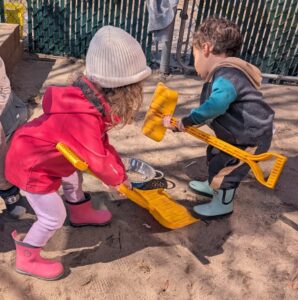
The behaviours they show us…
The drawings they concentrate on…
The books they choose from the library…
The clay sculptures they make…
The games they play…
The food they eat (or choose not to)…
The list of ways that the kids express themselves is never ending!
Everything they do is sending us a message, but can our grown-up ears hear what they are saying? And even more importantly, are we encouraging them to use their voices?

At Sunnyside, we make sure to give the children lots of ways and times to express themselves. We verbally ask them their likes and dislikes, but we also pay attention to what they are doing with their time and the classroom materials.
A child who refuses to eat lunch isn’t considered picky. They are expressing to us what they don’t like. A child who is regularly loud and high energy is not being disruptive, but rather telling us that they need more space or time to be active!
A child who walks in each morning and has the same quiet routine (says nothing for the first few minutes of class, sits alone with a book, and then has some water,) before joining everyone else is not considered shy. They are telling us that they are comfortable but still need a few minutes to prepare for the day.
When we pay attention to those messages, we can help the children feel comfortable and accepted. We can also help them put those messages into words. For instance, the child above who likes to be alone when they walk in is now able to tell the others “I’m not ready to talk yet but I will play with you when I am.”
So look closely at the kids around you. Listen to what they are saying. And then listen even harder to what they aren’t saying, as sometimes that can tell us even more!
*** It is Early Childhood week (or Grande semaine des tout-petits) in Quebec! For more information, visit the Collectif Petite Enfance.